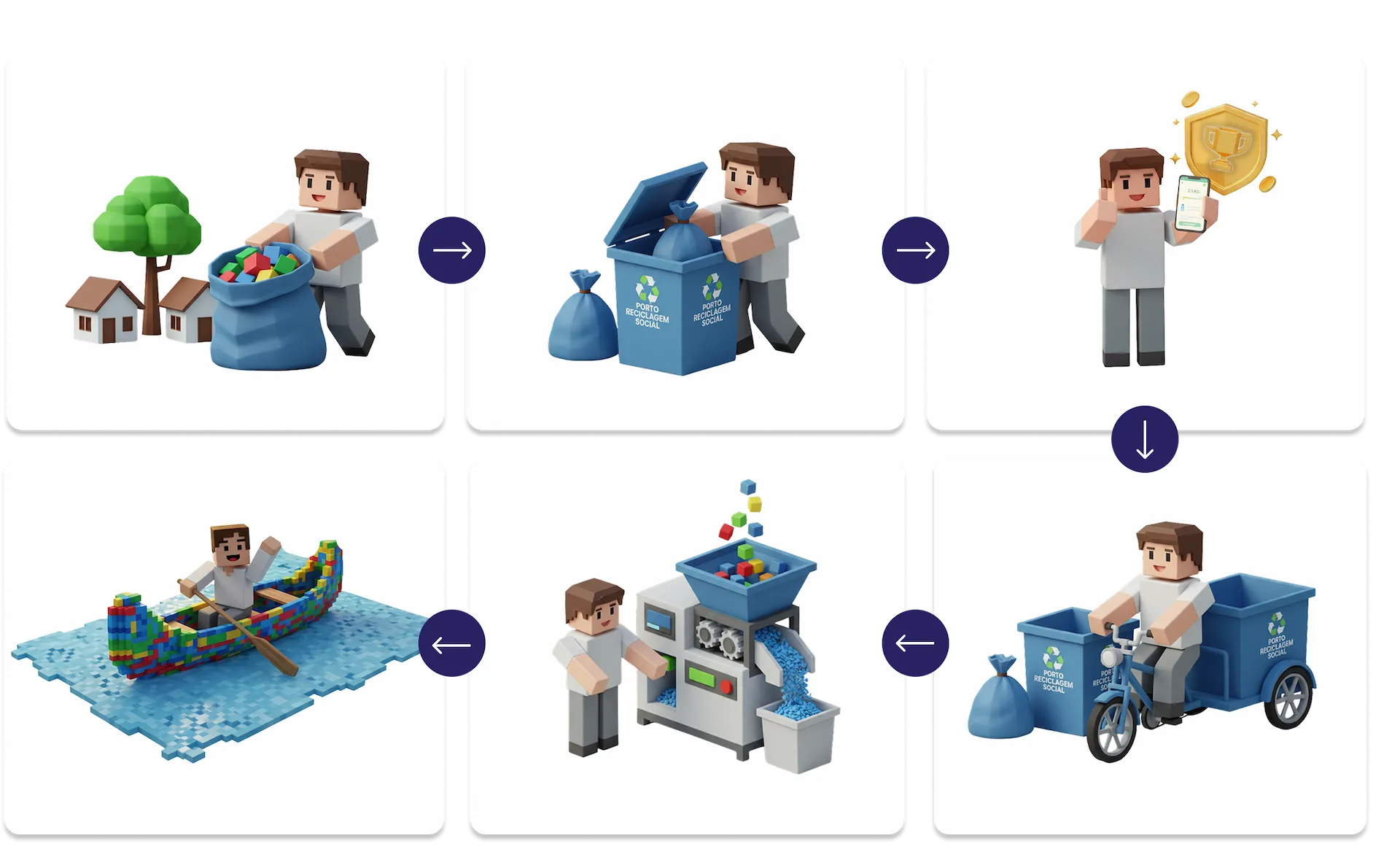
A socio-environmental initiative in Guanabara Bay, Rio de Janeiro (Brazil), dedicated to transforming how local communities relate to waste. Through community-operated waste collection points and hands-on training programs, SRS promotes the idea of plastic waste as a valuable resource, stimulating the local circular economy and creating opportunities for income generation, entrepreneurship and local leadership.
More than a recycling project, SRS connects communities, companies, and institutions to build circular solutions that reduce environmental impact and generate lasting social benefits. Our mission is to show that tackling plastic pollution is possible when innovation, inclusion, and community participation come together.
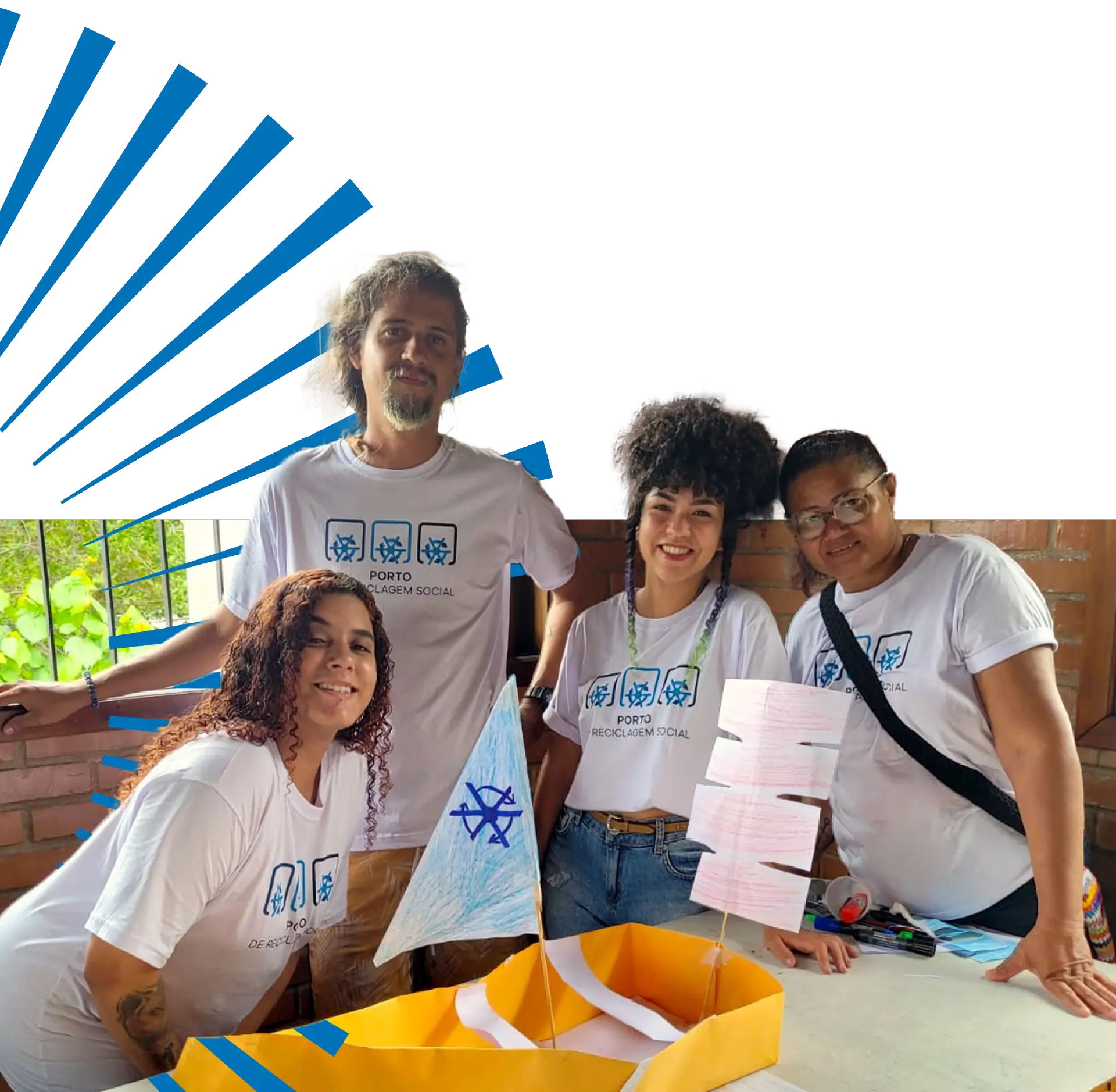
Through awareness raising and capacity building programmes the project aims to create local ownership, enhancing skills, and shift waste perceptions.
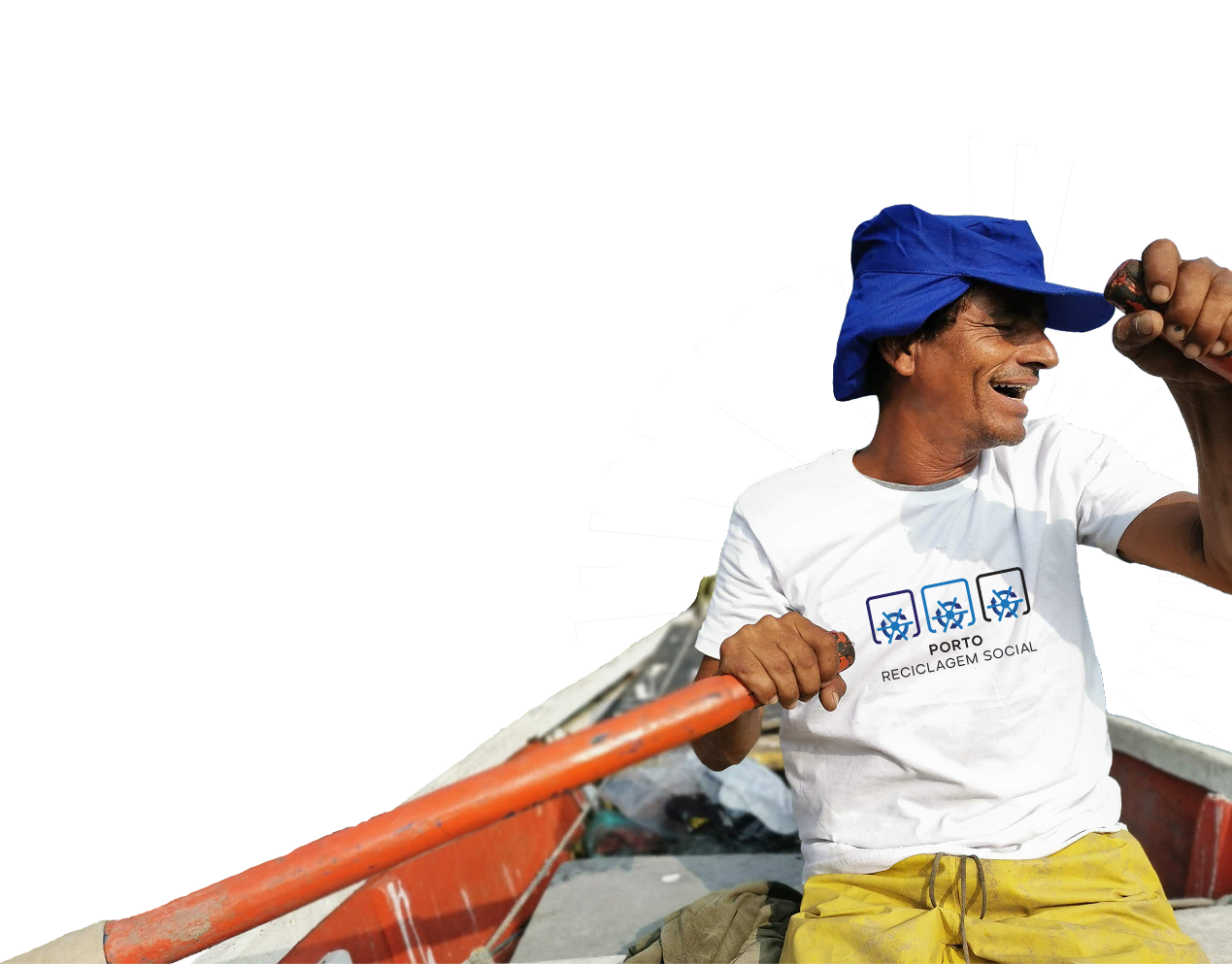
Fishermen, youth, women, and favela residents, who are often excluded from formal waste systems, are prioritized.
Trainings include content on socioemotional development, environmental literacy and technical skills, and circular entrepreneurship.
At the beginning of the project, we carried out a survey by listening to more than 600 residents from the three communities where we operate: the Z-10 Fishermen’s Colony, Complexo da Maré, and Manguinhos. Based on the results, we developed a socio-environmental diagnosis that guided the design of the project.
All SRS actions are only possible through partnership with the collective intelligence of these residents, who live in territories marked by low levels of sanitation and urban cleaning services.
The scientific foundation of the Social Recycling Shipyard is led by universities and research centers in Brazil and Germany.
Six master’s scholarships, academic exchanges, and a robust research program on marine polymers support the creation of the Marine Litter Recipe Book, an open-source publication that is compiling data and technical protocols to transform plastic waste into durable new products.
This initiative strengthens innovation in recycling, empowers young researchers, and generates globally applicable knowledge informed by the challenges of Guanabara Bay.
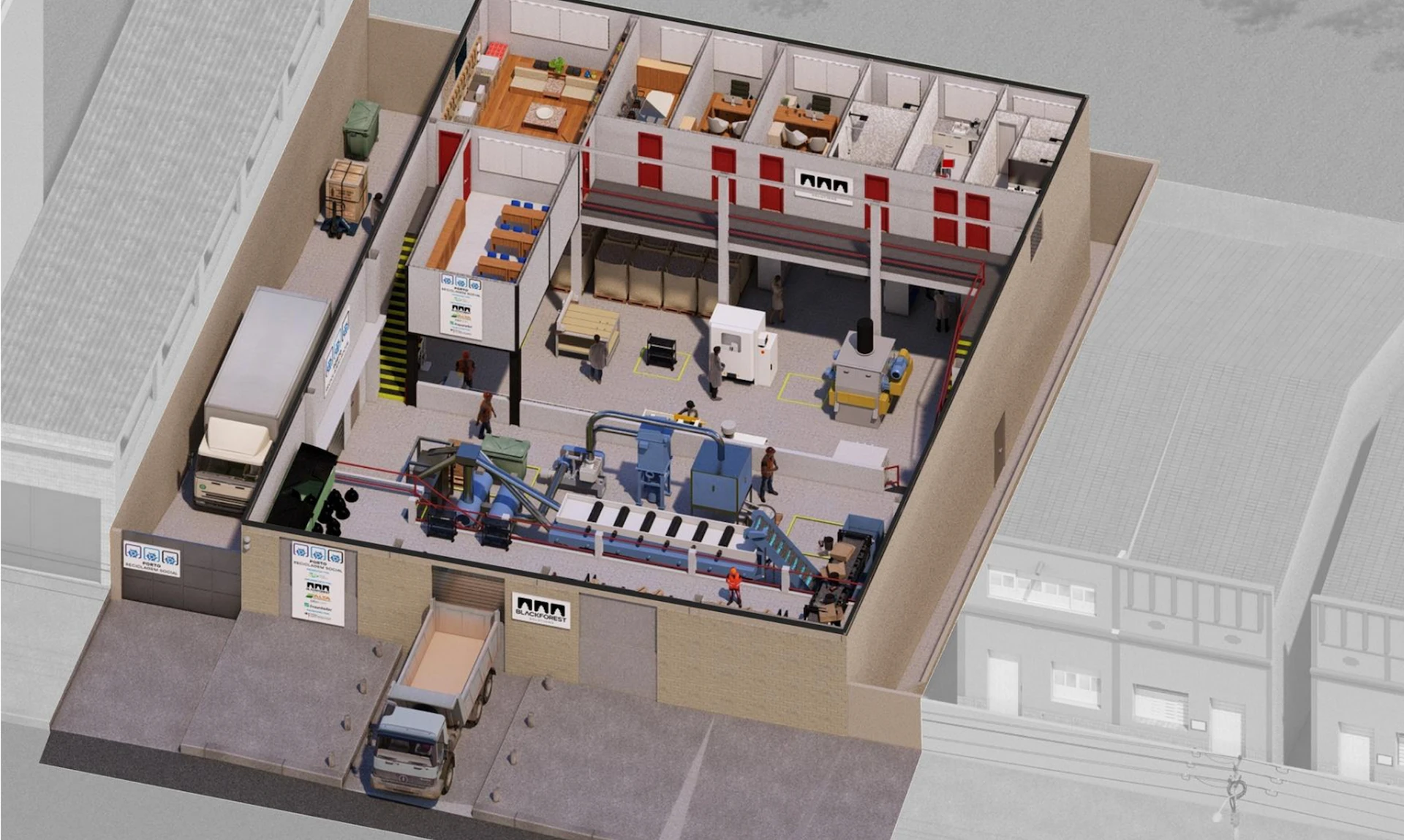
This is the project’s innovation engine. The place where collected plastic is transformed into higher-value products, from boats to durable items for local residents. Here, the material goes through separation, shredding, washing, and drying before becoming the raw material for new products.